How To Train For Your First Half Marathon
Whether you’ve just signed up for your first half marathon or you’ve been thinking about taking on the challenge for a while, the first question is usually the same: Where do I even start?
A few years ago, I was asking myself exactly the same thing. In 2024, I ran my first half marathon in just over 2 hours 12 minutes. One year later, I brought that time down to 1:36.
Following a proper training block completely changed the way I thought about running. It taught me that improving isn’t about being naturally talented (because I definitely wasn’t!) or running every day. It’s about having the right plan, understanding the purpose behind your training and staying consistent with it.
Whether your goal is simply to cross the finish line or chase a new PB, the principles are largely the same.
So, in this guide, I’m going to walk you through the training lessons, tips and advice that helped me take nearly 40 minutes off my half-marathon time in a year.
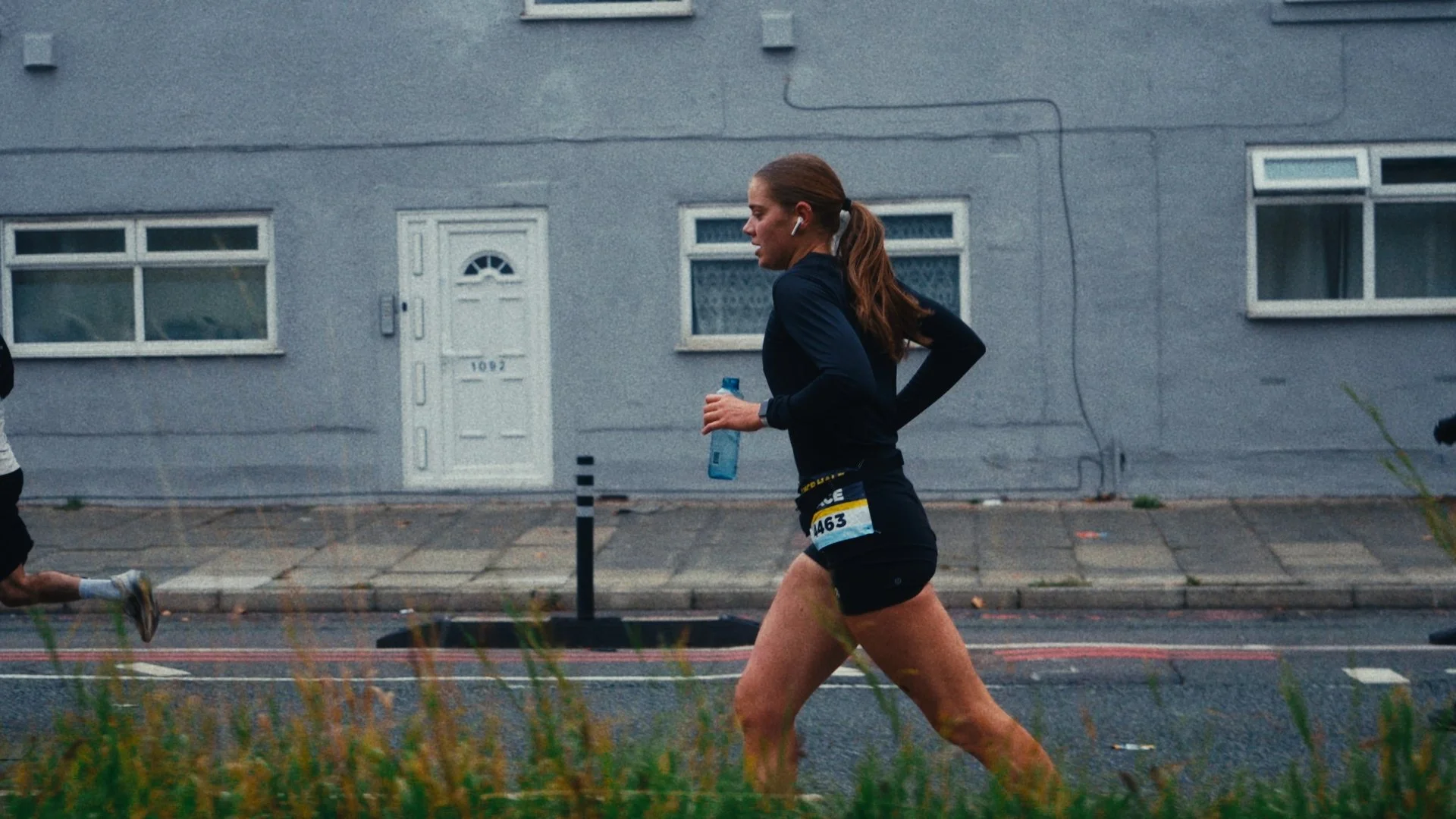
Manchester Half Marathon 2025
Get Yourself a Good Plan
One of the biggest mistakes first time half marathon runners make is copying someone else's training or having no real plan for their training at all.
The reality is that no two runners are the same.
Your experience, current fitness, injury history, lifestyle and available training time all influence what the right plan looks like for you. A programme that's perfect for one person could leave someone else injured, burnt out or underprepared.
For me, my coach started me with three well structured runs each week, with every run having its own clear purpose. As I’ve become more experienced, I’ve benefited from adding extra runs when they make sense. But when you’re completely new to running, starting with fewer sessions and building gradually is often the smarter approach.
The key isn’t finding the hardest training plan or the one promising an amazing finish time. It’s finding one that fits your life and that you can stay consistent with.
Set Yourself a Realistic Goal
Chances are, once you start training, you'll quickly go from "I just want to finish" to "I wonder if I could run under..." and that's all part of the fun. I've always been quite ambitious with my running goals too.
BUT the best memories rarely come from the number on your watch. They come from the journey, the training block and crossing that finish line knowing you gave it all you could. The times will look after themselves if you enjoy the process and stay consistent.
How Many Times Per Week Should You Run?
One of the biggest myths is that you need to run every day (don’t do this; you will most likely get injured!!) Believe me, in a last-minute panic attempt at a surprise marathon, I did it, and ended up with one very swollen Achilles.
For most first-time half marathon runners, three runs per week is enough to build fitness while allowing plenty of recovery.
A simple weekly structure might look like:
Easy Run – Builds your aerobic fitness.
Quality Session – Tempo, intervals, threshold.
Long Run – Gradually increases endurance.
This approach leaves room for strength training, work, recovery and life!! Without feeling overwhelmed.
Remember, fitness comes from consistent training over weeks and months, not from cramming as many runs as possible into one week.
Don't Skip Your Easy Runs!!!!!!
Easy runs are often misunderstood because they don't feel particularly hard. In reality, they're one of the most important sessions you'll do.
Easy running helps you:
Improve aerobic fitness.
Recover from harder sessions.
Increase endurance.
Build confidence running for longer.
If you finish every run completely exhausted, you're probably running too fast. A good rule is that you should be able to hold a conversation throughout an easy run. It might feel slower than you expected, but that's exactly the point.
As the block progresses, you will appreciate an easy run, run easy when you can and save that need for speed for your quality runs!
The Long Run
This is my favourite run of the week and one of the most important parts of half-marathon training.
Your long run gradually increases the amount of time you spend on your feet, allowing your body to adapt to running further without trying to do too much, too soon.
Most long runs should start at a genuinely easy, conversational effort. As your fitness improves, we'll gradually introduce sections at a steadier pace or around your half-marathon effort. This teaches your body to run efficiently on tired legs and prepares you for the demands of race day, without turning every long run into a hard session.
Long runs help you:
Build aerobic and muscular endurance
Feel more comfortable covering longer distances
Practise pacing, fuelling and hydration
Improve your ability to maintain good running form as fatigue sets in
Build the confidence you'll rely on when things get tough on race day
But remember: longer doesn't always mean better.
You don't need to run the full 21.1 km before race day. For most of my first-time half-marathon runners, the longest run will usually be between 16–19 km, depending on their experience, training history and how well they're recovering throughout the training block.

Liverpool Half Marathon 2026 with Client Ellie
Add One Faster Session Each Week
Running at different speeds teaches your body to become a stronger, more efficient runner.
A quality session could include:
Tempo efforts
Shorter, faster intervals
Hill repeats
Controlled efforts around your target race pace
Over time, these workouts improve your endurance, running economy and confidence, while helping your goal pace feel more comfortable.
The key is balancing these harder efforts with plenty of genuinely easy running. You don’t need to push the pace every day to become faster, in fact, doing too much hard running can make it more difficult to recover, stay consistent and get the most from your quality sessions.
Speed sessions took the most practice for me. At first, running faster felt uncomfortable, and the paces I wanted to reach seemed completely unrealistic. But this is where consistency really does pay off.
A pace I once couldn’t hold for even 400 metres eventually became a pace I could sustain across an entire marathon. Your goal pace might feel a long way off when you first begin, but each controlled session helps close that gap.
Strength Training as a Runner
A lot of runners still worry that strength training will make them bulky, heavy or slower. In reality, a sensible strength programme can help you become a stronger, more efficient runner and make your body more resilient to the demands of training.
The goal isn’t to train like a bodybuilder or leave the gym unable to walk. It’s to build strength in the muscles that support your running, particularly your glutes, hamstrings, calves and core.
Strength training can help you:
Reduce your risk of injury
Improve your running efficiency
Build stronger glutes, hamstrings and calves
Improve stability through your hips, knees and ankles
Maintain better posture and technique when you start to fatigue
For a beginner runner, one well-structured strength session each week can be plenty. Two sessions can be useful if your schedule and recovery allow, but more isn’t always better, especially when your running volume is increasing.
You also don’t need to spend hours in the gym. A focused 40–60 minute session covering a few key movement patterns can make a huge difference.
The main thing is that your strength training should support your running, not compete with it. You should leave feeling like you’ve done useful work, not so sore that your next few runs suffer.
Fuel and Recover Properly!!!!!
FUEL FUEL FUEL !!!
One of the biggest mistakes runners make during a training block is underestimating how much food they need. As your running increases, your energy needs increase too. Not eating enough can leave you feeling constantly tired, make sessions feel harder than they should and slow down your recovery between runs.
A few simple habits can make a huge difference:
Eat enough carbs to fuel your training and replace the energy you’ve used
Include a good source of protein across the day, especially after harder or longer sessions
Stay hydrated and consider electrolytes during longer runs or in hot conditions
Prioritise good-quality sleep wherever poss
Treat rest days as part of the plan
Once your long runs begin lasting around 75–90 minutes or longer, it’s also worth practising your race day fuelling. This could mean taking energy gels, or another easy-to-digest carb source during the run.
Fuelling during training isn’t just about getting through that one session. It helps you work out what your stomach tolerates, how often you need to take fuel and what you’ll carry on race day
! Never try something new for the first time on race day !
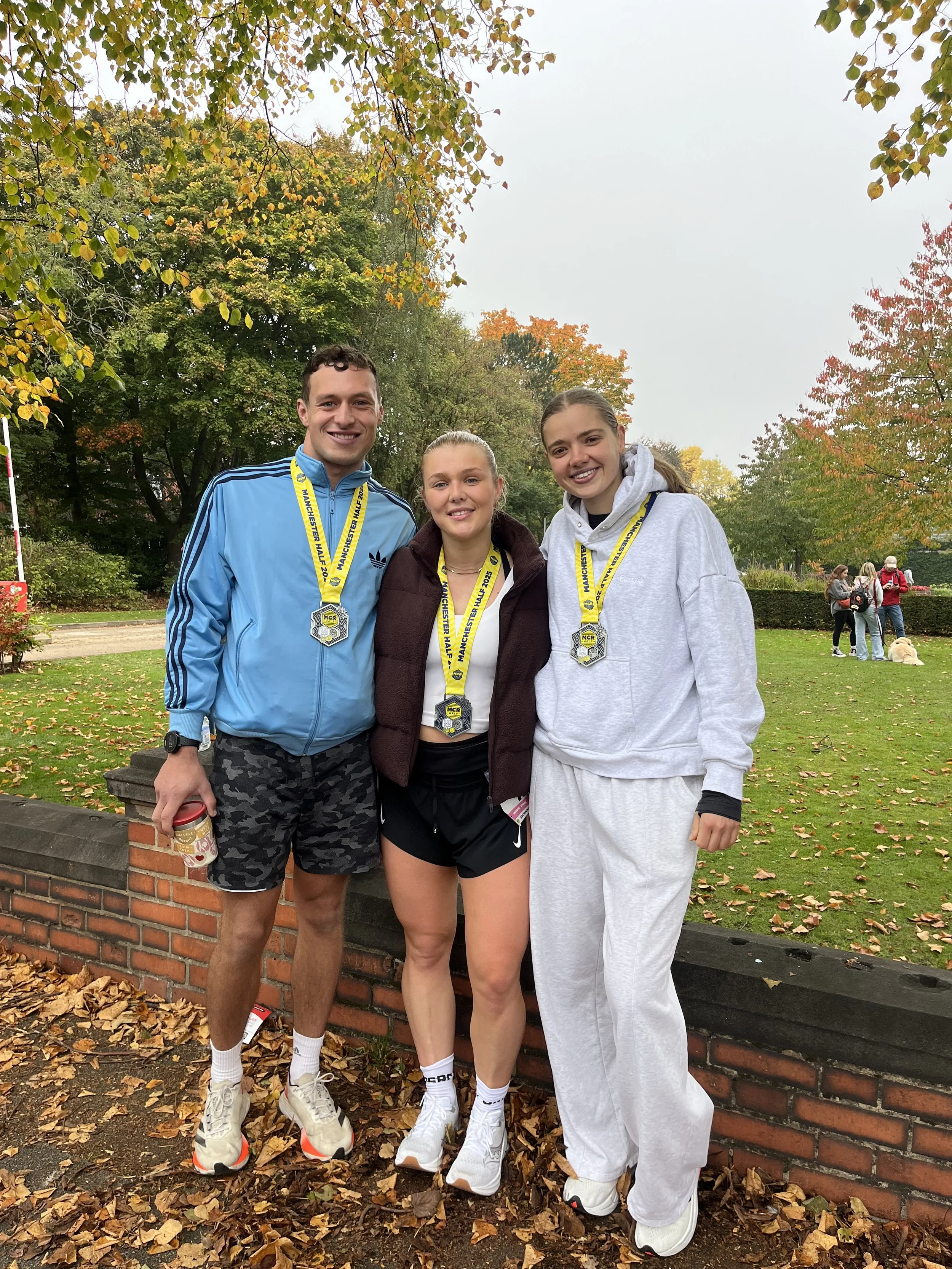
Manchester Half Marathon 2025 with Clients Lex & Millie
Training for your first half marathon doesn’t need to be overly complicated. You don’t need to run every day, hit every session perfectly or completely change your life overnight.
What matters most is having a realistic plan, understanding the purpose behind your sessions and staying consistent with the basics for long enough to see them work.
Some weeks will feel amazing and others won’t. You might miss a run, have to adjust your pace or need more recovery than expected and that’s completely normal. Progress rarely happens in a perfectly straight line.
When I started, the paces and distances I can run now felt completely unrealistic. They didn’t suddenly become achievable overnight. They came from gradually building my mileage, learning how to fuel properly, practising the harder sessions and continuing to show up week after week.
Your first half marathon is about so much more than covering 21k. It’s about the confidence you build along the way and proving to yourself that you’re capable of doing something that once felt completely out of reach.